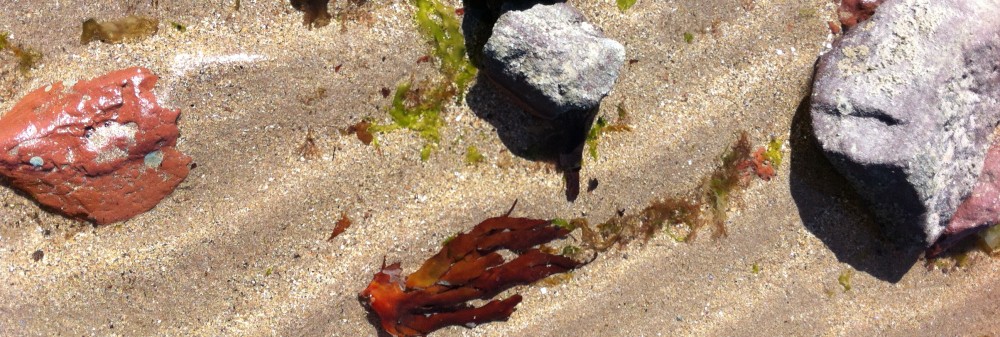
I was intrigued to read of the growing interest in using seaweeds as a source of biofuel across the globe and interested to know how Scotland could use its rich algae fields and extensive coastlines to capitalise on this. (Anything to do away with wind-farms!)
Some outstanding research has been done by the At-Sea project, a European research programme focusing on growing seaweeds on innovative textile mesh placed in shallow inshore waters, producing multiple annual harvests. One of the aims of the project is to develop a high tensile strength textile mesh and cables to act as a substrata, that is robust and durable enough to survive the tidal environment. The Scottish Association for Marine Science at Dunstaffnage near Oban, a key partner in the project, is also looking to design flexible and lightweight tanks to extend the project scope
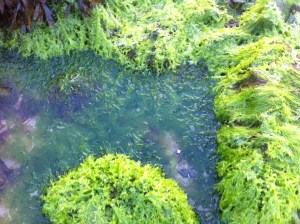 Farming annual fast-growing macroalgae seaweeds like Ulva lactuca and Palmaria palmata, in manmade inshore seabeds could deliver massive yields for the green energy industry. This would release a huge amount of land for food production now currently (and controversially) being used grow corn, palm oil and sugar cane for bio-fuel production. More interestingly, some research and development by companies both here and in the USA, has pointed to a 3-part yield: nutrient rich oils for the health market; bio-fuels, methane and ethanol for energy; and fertiliser compounds of agriculture.
One of the issues up to now in using seaweed biomass to develop bio-fuel has been the difficulty in finding a way to ferment the sugar from seaweed to turn it into ethanol. One Indian company , Sea6Energy, has developed a process using normal yeast to create a successful fermentation process for red seaweeds, whilst researchers at Berkeley, California have focused on developing genetically modified bacteria to do the trick.
Further research from the University of Delaware has found that one microscopic algae, Heterosigma akashiwo (common worldwide) actually grows on toxic gas emitted by power plants, neutralising what is currently a harmful and noxious substance. In fact the algae in this process actually thrive, growing twice as fast as normal and so producing huge amounts of carbohydrates that can be converted to biofuel – a real win-win situation!
Sources:
The Hearald: http://www.heraldscotland.com/news/home-news/magic-carpet-grows-seaweed-as-a-bio-fuel.21498281
Sea6 Energy: http://www.sea6energy.com/
Science Mag http://www.sciencemag.org/content/335/6066/308.abstract?sid=4917299c-2cb9-4c85-b5d7-68094f7a62bf
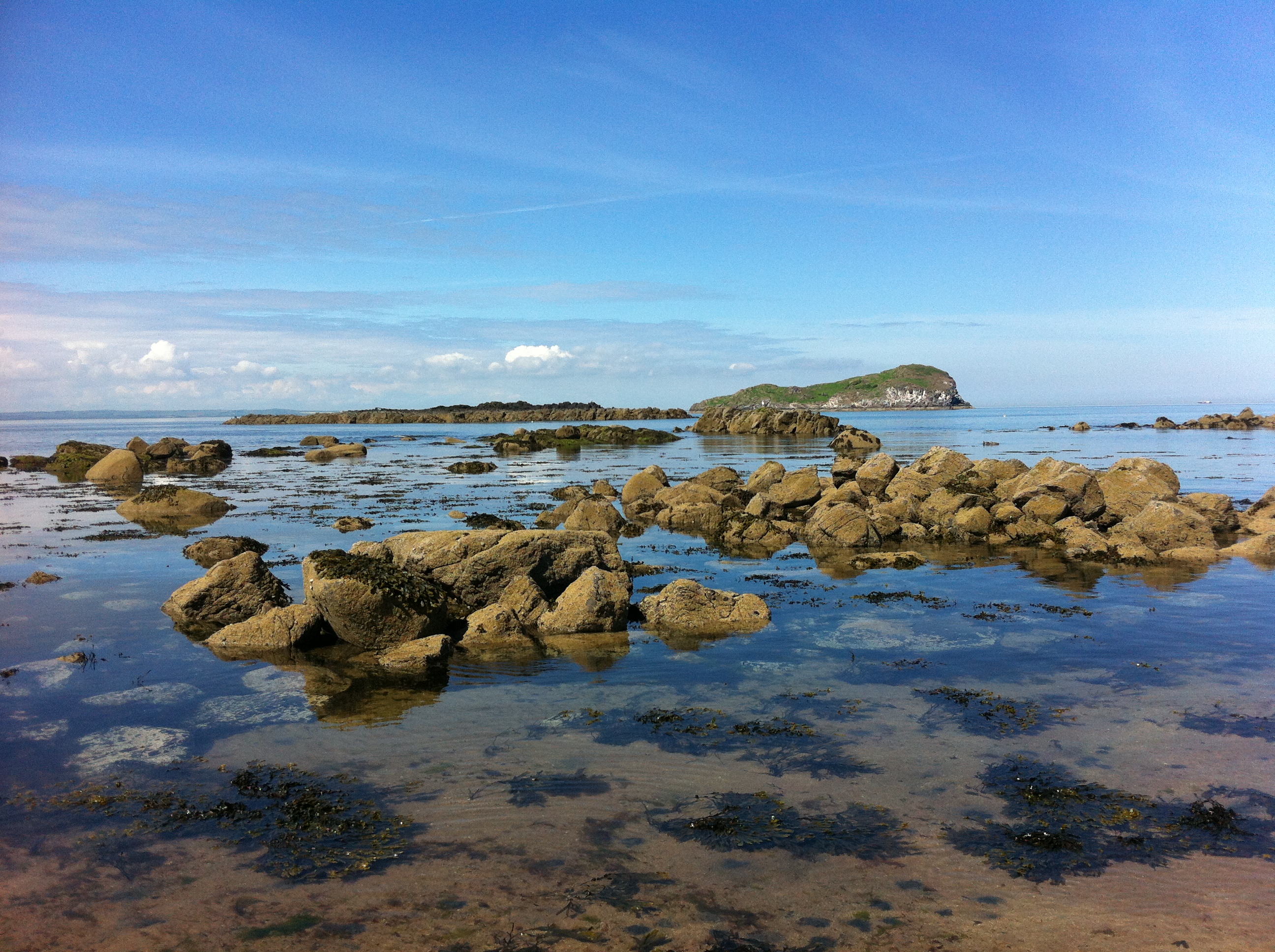


 Walking down to the beach the other evening, I found the tide at its lowest ebb, the sands drawn smooth by the ocean’s pull, and an ethereal glow infusing water’s edge to grassy shore. Opaque hues of iridescent blue and ribbons of red and gold fanned across the shimmering panorama/canvas. Funnels of light poured through the backlit clouds, illuminating and shifting colours, pushing and pulling shadows and shades to dance across the expanse. Yellow lichened rocks sparkled in the warming light and the Bass glowed luminous across the white-licked waves. The lapping tide arrested its movement and a golden peace descended; all breath expelled into gossamer air – the sea, the sky and the earth resting for a moment to let the tide turn.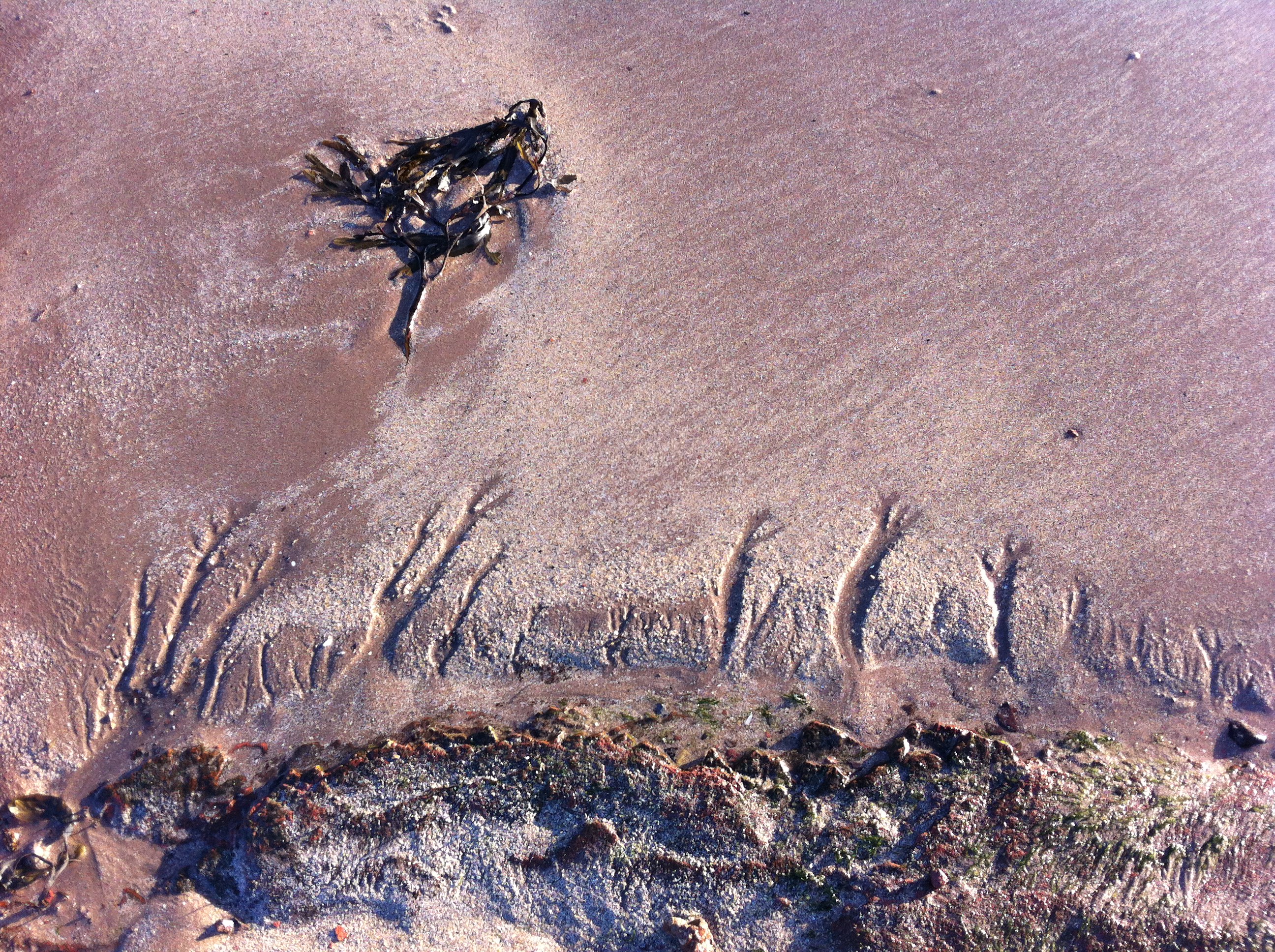


 Tang and Ware